

Prusament PA11
Prusament PA11 is an easy-to-print polyamide suitable for moving components, such as gears. This material offers high chemical, thermal, and mechanical resistance. This makes it usable in laboratories and, again, in automotive and other demanding industry fields.
Vlastnosti
Výhody
- Great high-temperature resistance after annealing (up to 122.5 °C)
- Great chemical resistance
- High impact and wear resistance (very strong and rigid material)
- Very low friction coeficient
- High UV resistance
- High tensile strength anisotropy coefficient
- Noticeably less hygroscopic compared to other polyamides
Nevýhody
- A special print sheet (or separation layer) is required
- Hygroscopic (absorbs moisture)
- Emits odors during printing (enclosure with active filtration recommended)
- Low dimensional stability (strong warping)
Použití
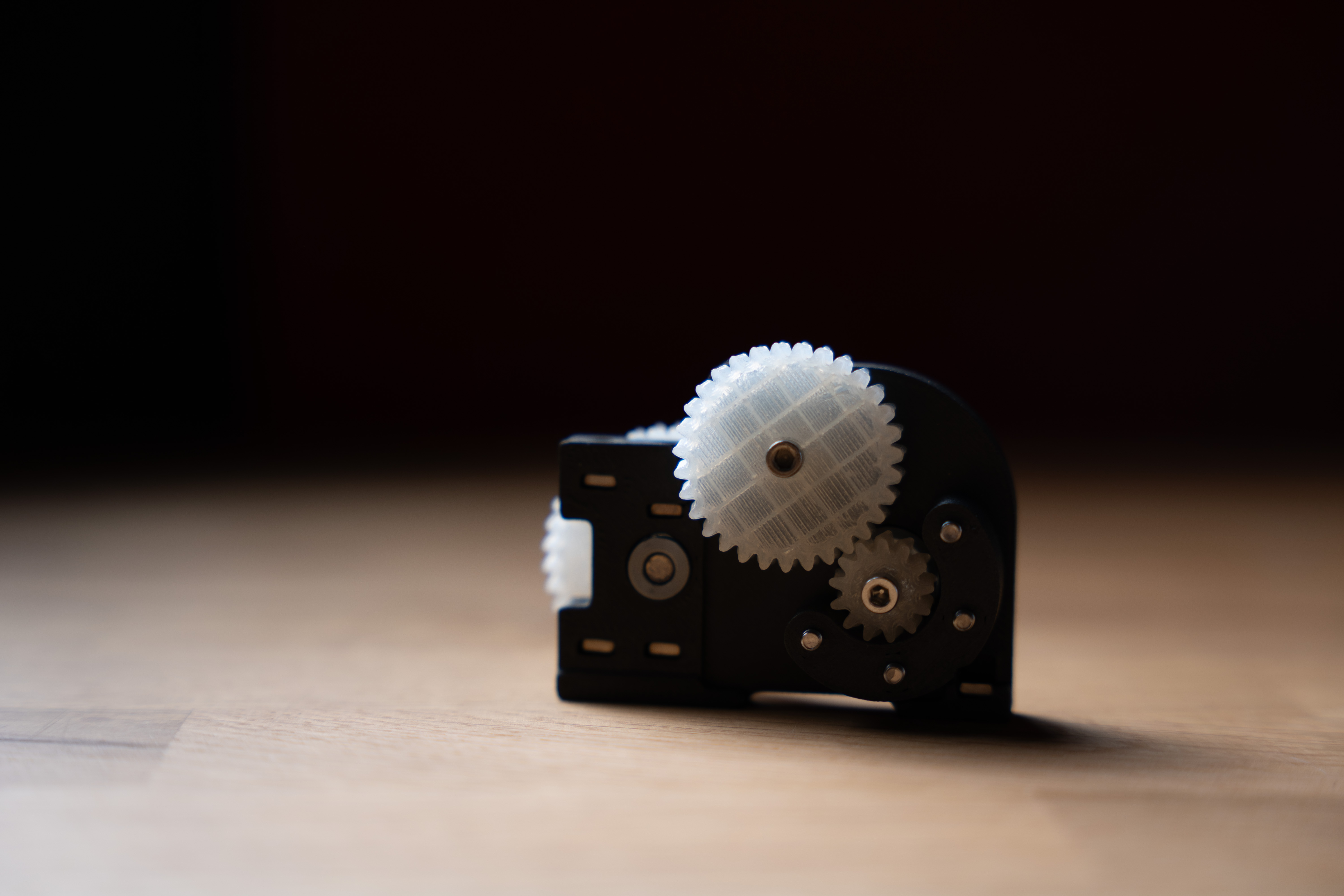
Gears and other moving components
Prusament PA11 offers low friction and good abrasion resistance. Combined with decent mechanical properties (impact and tensile strength), it’s perfectly suitable for printing gears and other moving parts.
Chemically resistant parts
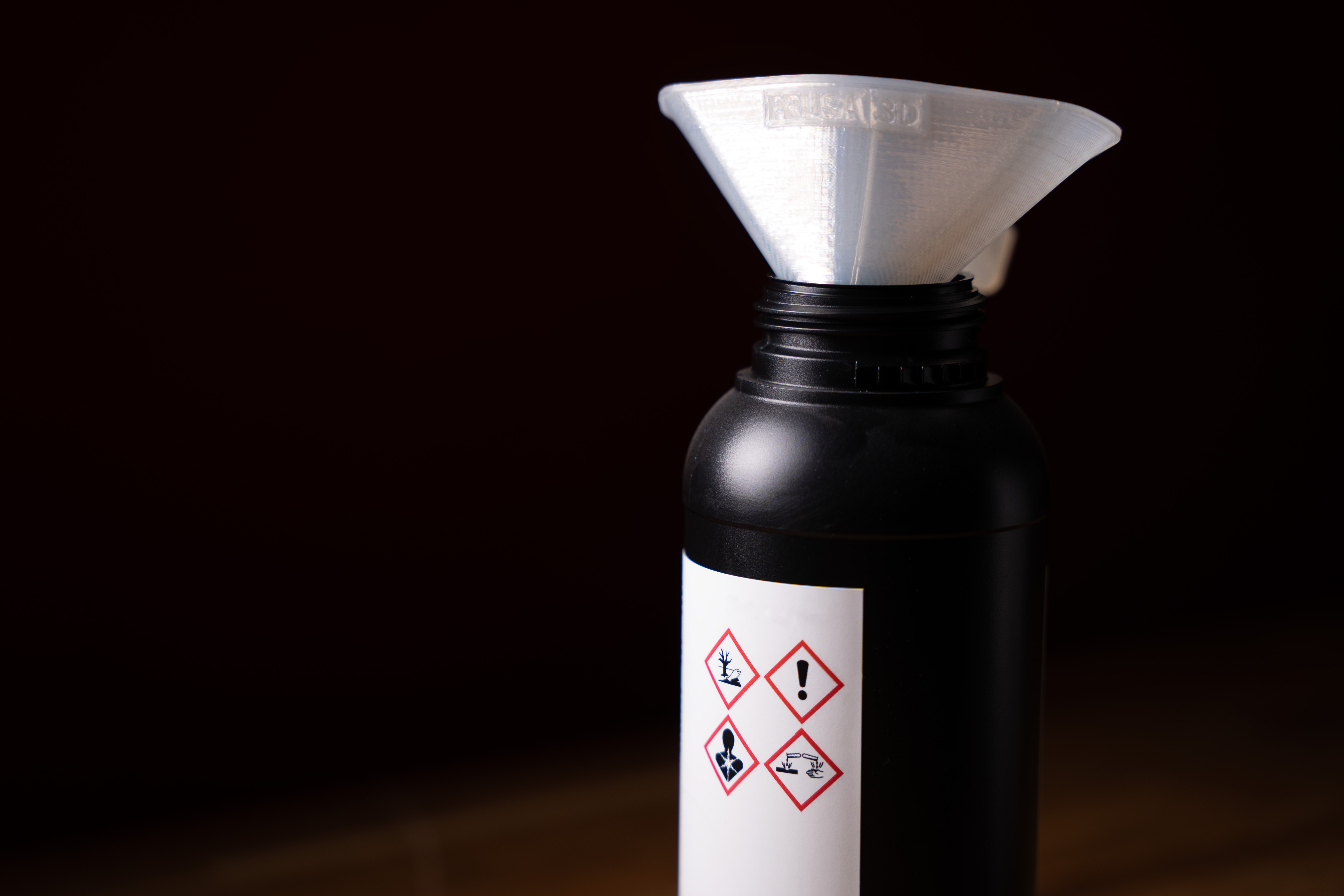
PA11 has good resistance to bases (e.g. NaOH), alcohols (Methanol, Ethanol), toluene, acetone, motor oil, petrol, diesel, etc. This makes it usable in laboratories and, again, in automotive and other demanding industry fields.

Hard-to-break models
Prusament PA11’s tensile strength anisotropy coefficient reaches r=0.84 when printed with Prusa Core One+. This is the highest value of all Prusaments. This means the material is much harder to break and withstands stress in every direction, no matter the layers’ orientation. This vertically printed umbrella holder serves as a good example.
Detaily
- Printing difficulty
- Hard
- Print speed
- Medium
- Susceptibility to warping
- High
- Odor
- High
- Active filtration recommended
- Post processing
- Difficult
- High abrasion resistance
- Elasticity
- Medium
- Abrasivity
- None
- High-temperature resistance
- 122.5 °C
- After annealing
- Tensile yield strength
- 38.3 MPa
- Horizontal
- Tensile modulus
- 1.2 GPa
- Horizontal
- Interlayer adhesion
- 32 MPa
- Tensile strength anisotropy coefficient
- r=0.84
- Impact Strength Charpy Notched
- 12.9 kJ/m2
- Horizontal
Prusament PA11 (polyamide) is a semicrystalline thermoplastic made from castor oil. It offers high impact resistance (even at low temperatures), great wear resistance, excellent sliding properties and high UV resistance. The material is suitable for various moving parts and bendable components, even for long-lasting outdoor applications.
Download Safety Data Sheet (PDF)
Printer requirements
| Nozzle | Temperature: 275 ± 10 °C Standard 0.4 mm brass nozzle |
|---|---|
| Heatbed | Temperature: 100 ± 10 °C |
| Recommended Steel Sheet | PA Nylon |
| Enclosure | Required temperature: 55 ± 5 °C |
| Supported 3D printer profiles | CORE One+, CORE One L, Prusa Pro HT90 |
Try our PA Nylon sheet designed for printing Polyamides
Prusament PA11 can easily peel and warp when printed on conventional sheets. Sure, smaller models with sparse infill can be printed on PEI sheets coated with stick glue, but for reliable printing of technical models, you need something better. Prusament PA11 in particular can easily peel and warp when printed on conventional sheets. That’s why we have developed a new surface layer of a special material that provides significantly better adhesion for polyamide printing materials.
Dostupné barvy
Tipy a triky pro začátečníky
Don’t apply IPA on the Special PA Nylon Print Sheet
This print sheet gets damaged when cleaned with isopropyl alcohol, acetone, or other chemicals. Instead, the sheet’s surface should be washed with water before use. If you need to degrease the surface, wash it with dish soap.
Apply a thin layer of stick glue before printing on the PA Nylon Sheet
PA11 adheres strongly to the PA Nylon Sheet. We recommend applying a thin separation layer to prevent any damage, especially when printing large components.
PA11, like other polyamides, is a hygroscopic material and requires drying
If the absorbed humidity reaches high levels, the print quality will deteriorate. Deterioration occurs between a few days and a month. If you are not sure how long it has been since you opened the sealed bag or if you haven’t been printing for a long time, we recommend drying the filament at 90 °C for 6-8 hours before printing.
Print in a well-ventilated area or use an enclosure with active filtration
We recommend printing in a well-ventilated room because PA11 may release a noticeable odor into the air and produce ultra-fine particles. Printing on an enclosed 3D printer helps contain the odors and particles, plus the increased temperature may improve layer-to-layer adhesion.
Ukázkové výtisky z PA11

